


Kintsugi in Kyoto: Why Craftsmanship Alone Is Not Enough in the Modern Era
Kintsugi in Kyoto: Beyond Craftsmanship
In traditional Japanese culture, there has long been a belief: “Focus on your craft. Stay silent. Let your work speak.”
But today, that is no longer enough.
As artisans living in the modern era, we are asked not only to create—but also to communicate, explain, and deliver our work to the world.
This is a story about that shift.

Loving the Craft, But Fearing Visibility
When I first entered the world of craftsmanship in my 20s, I was deeply devoted to developing my technical skills.
However, when it came to “showing my work” or “communicating its value,” I avoided it entirely.
I truly believed:
Promotion was not my job
Marketing felt like selling out
Speaking about myself felt uncomfortable and even shameful
To be honest, I even had biases:
“Sales is pushy”
“Social media is for attention-seekers”
Looking back, this mindset came from a sincere—but narrow—pursuit of ideal craftsmanship.
The Hidden Fear Behind “Not Being Good at Business”
Many artisans say: “I’m not good at business” “I don’t like promoting myself”
But in my case, that wasn’t the full truth.
What I was really afraid of was responsibility.
What should I say when someone asks for a price?
How do I handle rejection?
What if I fail—who takes responsibility?
These are basic elements of business.And I simply had no experience with them.
So instead, I stayed silent.I stepped back.I convinced myself:
“This is not my role.”

Standing in Front: Not Competition, But Responsibility
There is a phrase a senior artisan once told me:
“As long as you are shaken by whether something sells or not, you are still halfway there.”
At the time, it felt harsh.
Now, I understand.
The problem wasn’t that I couldn’t stand in front. It was that I wasn’t ready to.
To share your work is to take responsibility for it. To communicate its value is to stand behind it fully.
Without that, no matter how skilled you are, you remain behind someone else.
Why Modern Artisans Must Do Both
I used to think that promotion was a battlefield—a place where people compete for attention.
But now I see it differently.
Stepping forward is not about competing with others. It is about facing yourself.
What does my work mean?
Why do I do this?
Who is it for?
These are not marketing questions. They are questions of identity.
Tradition × Innovation: A New Role for Artisans
Today, artisans are not only makers.
We are:
storytellers
communicators
bridge-builders between cultures
Having little business experience is not shameful. Feeling uncomfortable about self-promotion is natural.
In fact, that vulnerability allows us to connect more deeply with others.
Because someone out there is struggling with the same hesitation.
You Don’t Have to Be Perfect—Just Honest

In conversations with fellow artisans, we often say:
“It’s okay if you’re not good at it. But you still have to try to deliver something.”
You don’t need to be polished. You don’t need to be confident.
But you do need to be honest.
Being sincere about your work and your message—that is what creates true connection.
Kintsugi: A Personal and Direct Experience in Kyoto
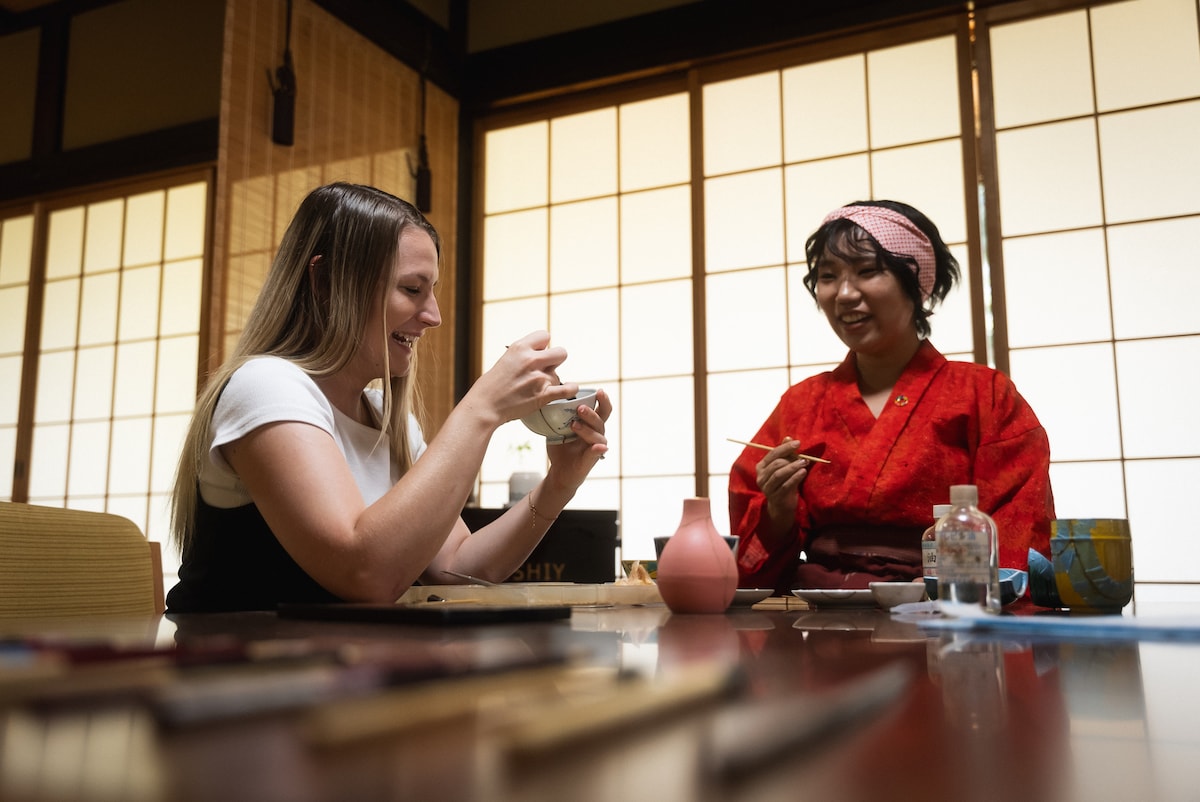
The Kintsugi experience I offer in Kyoto is not outsourced or mediated.
I personally take responsibility for:
guiding each guest
sharing the philosophy behind the craft
creating a meaningful, human connection
This is not just a workshop.
It is a moment of encountering a real artisan in Japan.

Visit Kyoto, Meet the Craft
If you are interested in Japanese culture beyond the surface , I invite you to experience Kintsugi directly with a working artisan.
Not through mass tourism. But through a personal, honest encounter.
Because in today’s world, craftsmanship is not only about making—
It is about connecting.
While it may be unrealistic to remove all the barriers within traditional industries in my generation alone, I see that not as a limitation—but as a starting point.
Because every small step we take today becomes a foundation for what comes next.
That is why I choose to share this journey with the world,and to pass this question on to the next generation:
What does it truly mean to be an artisan in our time?
Not to preserve tradition as it is, but to let it evolve—through responsibility, creativity, and connection.
Let`s look forward to seeing ASSP!
Best regards, Tomomi Sakamoto
